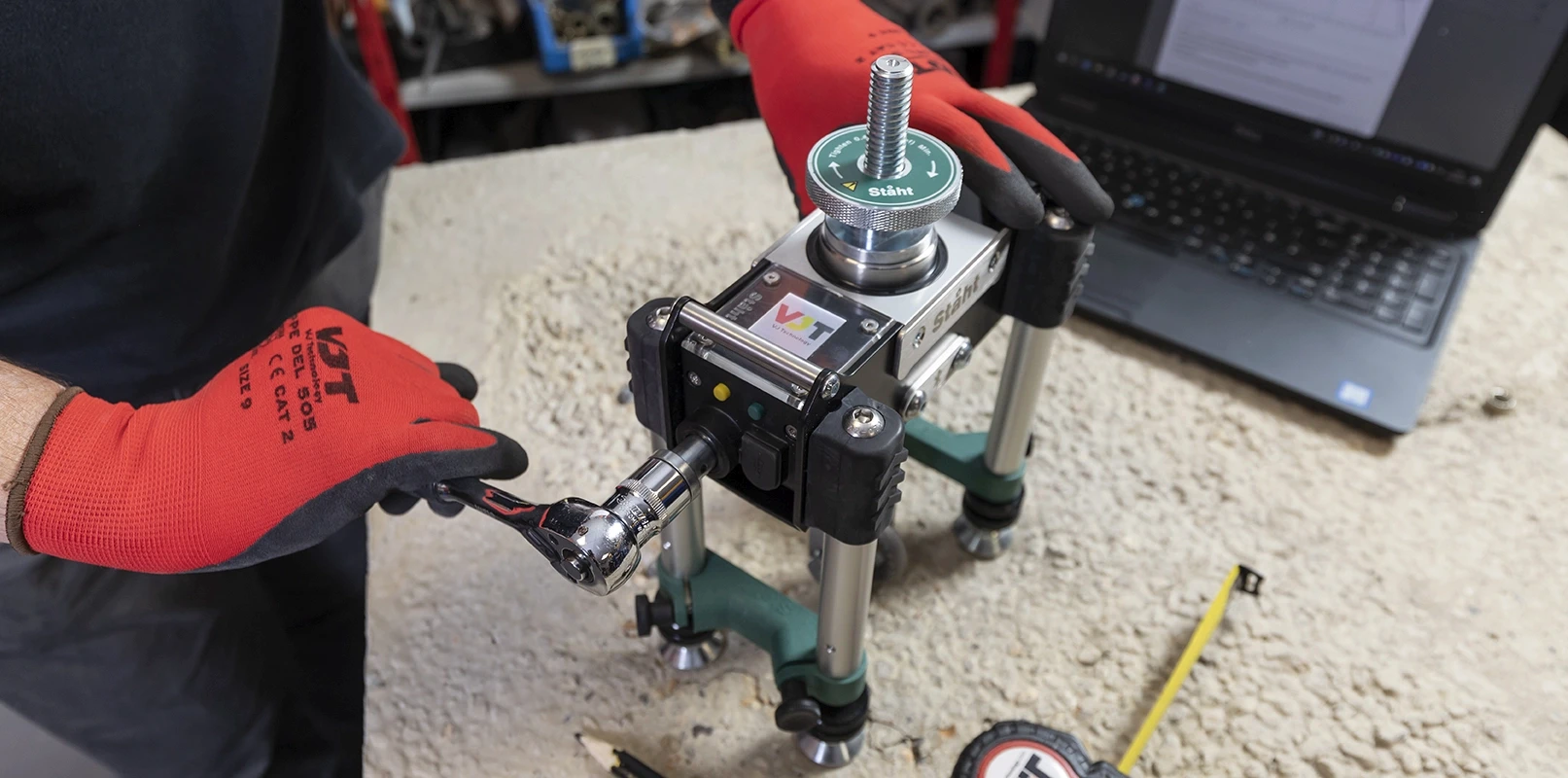
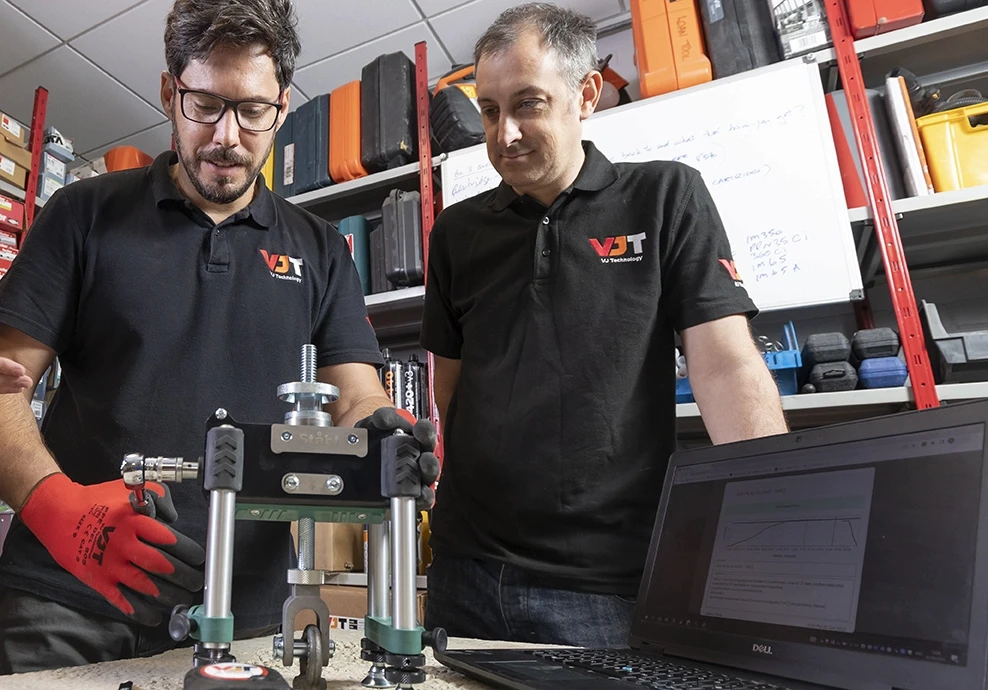
At VJ Technology, our CFA-approved on-site testing is carried out in accordance with BS 8539:2012+A1:2021, helping contractors, engineers and site teams demonstrate compliance and confidence in post-fixed anchor systems.
What We Can Test
Our testing covers both proof testing and allowable load testing (or “suitability” tests) for a wide range of construction fixings and anchor systems into concrete and masonry*, with a tensile load capacity of up to 600kN. We can also support bespoke testing for non-standard applications or when anchoring into unique base materials.
*Note that for other base materials e.g. steel there is currently no recognised on-site test regime for fixings.
Proof testing and Allowable Load Testing

What is Proof Testing?
Proof testing is the method of applying a controlled tensile load on a sample of working anchors, to ensure the anchors have been installed correctly. This is the most common test type that is required and can help identify incorrect installation, especially with anchors that require a precise installation method e.g. resin anchors or torque-controlled expansion anchors.
Note that proof testing is not intended to verify an anchor’s design, which should normally be conducted prior to the selection of the anchor and utilise the manufacturer’s data/ETA.
What is Allowable Load Testing?
Used where manufacturer’s data is absent for the specific application, allowable load testing (or “suitability testing”) is used to determine the tensile capacity of the anchor in a given base material. The most common reason for this type of test is for anchors into masonry, where manufacturers data is often absent or only covers a discrete selection of masonry types.
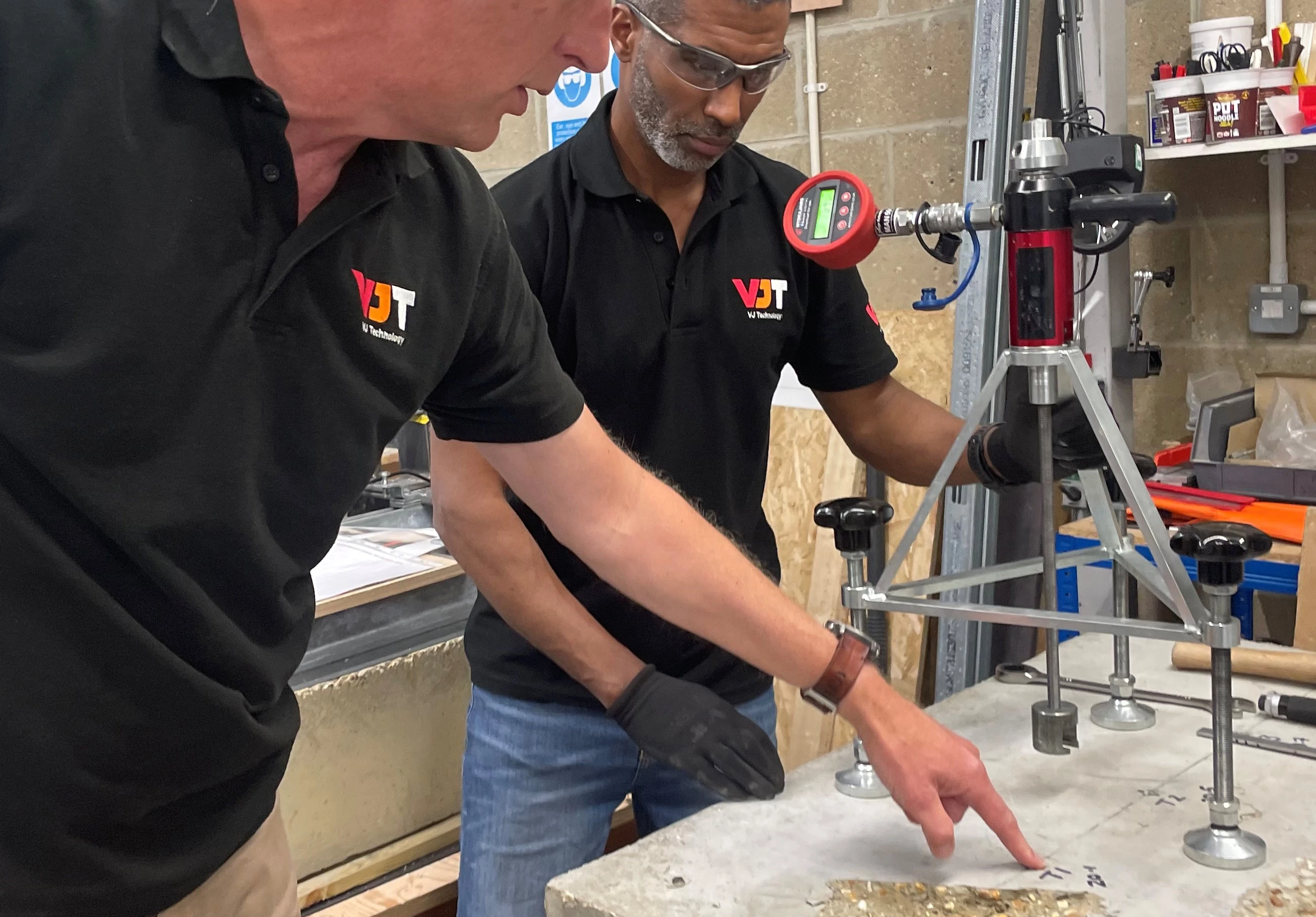
The approach involves loading a series of sacrificial anchors either to failure or a “preliminary load” (usually several times the unfactored load required of the anchor). The results can then be used to aid the design process.
On-site Allowable Load Testing
On-site allowable load testing is a simplified approach to anchor testing and should not be used to replace manufacturer’s test data. Where possible an ETA anchor should be selected as the rigorous processes required to achieve ETA’s tests the anchors against a much greater range of criteria, which are not possible under site conditions – one example being tests for cracked concrete.
Frequently asked questions.
What is UKAS accreditation in anchor testing?

When should anchor pull testing be carried out?
Do I need training for installing anchors?
What standards do your technical services comply with?