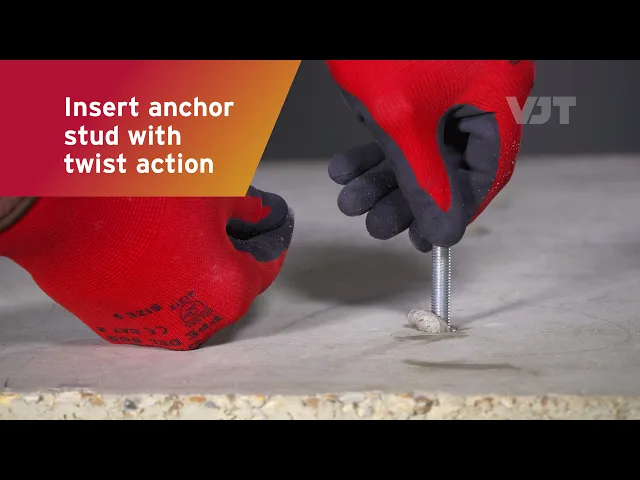
The hidden impact of drill hole cleaning on resin anchors
Resin anchors and drill hole cleaning
Resin anchors rarely fail because of the product itself. In most cases, performance issues are linked to installation. One of the most common and overlooked factors is drill hole cleaning. Dust left inside a drilled hole may not be visible after installation, but it can significantly reduce load capacity and affect long-term reliability.
See the difference in practice
This video demonstrates the difference between a correctly cleaned hole and one left full of drilling dust.
Why drill hole cleaning is important for resin anchors
Resin anchors rely on adhesion to the base material. For this bond to develop properly, the resin must come into direct contact with the concrete or masonry.
If dust remains inside the hole:
The resin bonds to a layer of debris rather than the substrate
Full resin bond strength is not achieved
Load capacity decreases
The anchor may not reach its desired load
For this reason, BS 8539 (Code of practise for the selection and installation of post-installed anchors in concrete and masonry, Clause 7+8) stresses the importance of following the manufacturers guidance for hole cleaning during installation.
In practical terms, inadequate cleaning can result in failed fixings, costly rework, and potential long term safety risks.
Clean vs. unclean drill holes
Clean drill hole
Direct bond between resin and substrate
Full design load capacity achieved
Consistent and predictable performance
Unclean drill hole
Dust acts as a barrier to bonding
Reduced load performance
Increased risk of pull-out failure
Although the difference may not be visible externally, the resin bond strength can vary significantly from published data.
What are the main drill hole cleaning methods
For the VJT injection resin range, the most common process for preparing drill holes for resin anchors is:
Blow out dust from the hole*
Brush the internal surface using the correct diameter wire brush
Blow out the hole again*
*Check installation instructions for which air tool to use
This is known as the blow-brush-blow method. Depending on hole depth and system requirements, the exact installation procedure may differ. Manufacturer instructions should always be followed.
There are four possible cleaning methods given in the anchor ETA’s:
Manual air cleaning (MAC) – uses hand pump and wire brush
Compressed air cleaning (CAC) – uses compressed air pistol and wire brush
Hollow drill bit cleaning (HDB) – uses hollow drill bit to remove dust during drilling
Water flushing (SPCAC) – uses water to rinse out drilled holes
Note that the resin bond strength performance given in the ETA can vary depending on the cleaning method used. In VJT’s DesignFiX anchor software the cleaning method can be selected to correctly model anchor optimisation.
The hole depth, diameter and concrete condition (e.g., cracked or uncracked) dictates which of the above methods can be used. Always refer to the product instructions or ETA.
Common installation mistakes
Many anchor failures are caused by issues during hole preparation. Common mistakes include:
Not cleaning the hole
Using worn, undersized, or incorrect wire brushes
Skipping the second blow-out step
Rushing installation
Air pockets in the resin mortar
These errors prevent the resin from bonding effectively, regardless of product quality.
Key takeaway
The performance of a resin anchor depends on the quality of installation, starting with the drilled hole. A properly cleaned hole allows the anchor to achieve its intended load capacity. An unclean hole introduces risk and uncertainty.
The hidden impact of drill hole cleaning on resin anchors
Resin anchors and drill hole cleaning
Resin anchors rarely fail because of the product itself. In most cases, performance issues are linked to installation. One of the most common and overlooked factors is drill hole cleaning. Dust left inside a drilled hole may not be visible after installation, but it can significantly reduce load capacity and affect long-term reliability.
See the difference in practice
This video demonstrates the difference between a correctly cleaned hole and one left full of drilling dust.
Why drill hole cleaning is important for resin anchors
Resin anchors rely on adhesion to the base material. For this bond to develop properly, the resin must come into direct contact with the concrete or masonry.
If dust remains inside the hole:
The resin bonds to a layer of debris rather than the substrate
Full resin bond strength is not achieved
Load capacity decreases
The anchor may not reach its desired load
For this reason, BS 8539 (Code of practise for the selection and installation of post-installed anchors in concrete and masonry, Clause 7+8) stresses the importance of following the manufacturers guidance for hole cleaning during installation.
In practical terms, inadequate cleaning can result in failed fixings, costly rework, and potential long term safety risks.
Clean vs. unclean drill holes
Clean drill hole
Direct bond between resin and substrate
Full design load capacity achieved
Consistent and predictable performance
Unclean drill hole
Dust acts as a barrier to bonding
Reduced load performance
Increased risk of pull-out failure
Although the difference may not be visible externally, the resin bond strength can vary significantly from published data.
What are the main drill hole cleaning methods
For the VJT injection resin range, the most common process for preparing drill holes for resin anchors is:
Blow out dust from the hole*
Brush the internal surface using the correct diameter wire brush
Blow out the hole again*
*Check installation instructions for which air tool to use
This is known as the blow-brush-blow method. Depending on hole depth and system requirements, the exact installation procedure may differ. Manufacturer instructions should always be followed.
There are four possible cleaning methods given in the anchor ETA’s:
Manual air cleaning (MAC) – uses hand pump and wire brush
Compressed air cleaning (CAC) – uses compressed air pistol and wire brush
Hollow drill bit cleaning (HDB) – uses hollow drill bit to remove dust during drilling
Water flushing (SPCAC) – uses water to rinse out drilled holes
Note that the resin bond strength performance given in the ETA can vary depending on the cleaning method used. In VJT’s DesignFiX anchor software the cleaning method can be selected to correctly model anchor optimisation.
The hole depth, diameter and concrete condition (e.g., cracked or uncracked) dictates which of the above methods can be used. Always refer to the product instructions or ETA.
Common installation mistakes
Many anchor failures are caused by issues during hole preparation. Common mistakes include:
Not cleaning the hole
Using worn, undersized, or incorrect wire brushes
Skipping the second blow-out step
Rushing installation
Air pockets in the resin mortar
These errors prevent the resin from bonding effectively, regardless of product quality.
Key takeaway
The performance of a resin anchor depends on the quality of installation, starting with the drilled hole. A properly cleaned hole allows the anchor to achieve its intended load capacity. An unclean hole introduces risk and uncertainty.